
-
Cinco Jotas 100% Iberian Bellota Shoulder (5 - 6Kg)
Vendor:Cinco JotasRegular price From €195,00 EURRegular price -
ALTANZA 100% Iberian Bellota Shoulder 4.9-5.2kg
Vendor:Jamones AltanzaRegular price €165,00 EURRegular price -
ALTANZA 50% Iberian Breed Cebo de Campo Shoulder (4.9-5.2Kg)
Vendor:Jamones AltanzaRegular price €99,00 EURRegular price -
Altanza 100% Iberian Bellota Shoulder DO Summum 4.9-5.2 kg
Vendor:Jamones AltanzaRegular price €210,00 EURRegular price -
Bellota 100% Ibérico Ham Shoulder COVAP ORO Alta Expresión D.O. Los Pedroches 5-5.5kg
Vendor:CovapRegular price €235,00 EURRegular price -
50% Iberian Cebo Shoulder CRIANZA (approx. 5.5kg)
Vendor:CRIANZA IbéricaRegular price €99,00 EURRegular price -
BEHER Red Label 100% Iberian Cebo de Campo Shoulder (4.9-5.2Kg)
Vendor:BEHERRegular price €129,99 EURRegular price -
Don Ulpiano 100% Iberian Acorn-fed Shoulder
Vendor:Ibéricos Don UlpianoRegular price From €145,00 EURRegular price -
Sánchez Romero Carvajal 100% Iberian acorn-fed shoulder (5 - 5.5kg)
Vendor:Sanchez Romero CarvajalRegular price From €195,00 EURRegular price -
Acorn-fed Iberian Shoulder 100% Organic Iberian Breed (5-5.5kg) Extrem Pure Extremadura
Vendor:Extrem Puro ExtremaduraRegular price €199,00 EURRegular price -
Acorn-fed Iberian Shoulder 50% Iberian breed Montetances
Vendor:Extrem Puro ExtremaduraRegular price €62,09 EURRegular price€145,45 EURSale price €62,09 EURSold out -
Don Ulpiano 50% Iberian Cebo de Campo Shoulder
Vendor:Ibéricos Don UlpianoRegular price €119,95 EURRegular price -
Cinco Jotas 5-J 100% Iberian Bellota Shoulder Sliced 80 g
Vendor:Cinco JotasRegular price €21,87 EURRegular price -
100% Ibérico Acorn-fed Paleta Covap PLATA Alta Expresión
Vendor:CovapRegular price From €159,00 EURRegular price€179,00 EURSale price From €159,00 EURSale


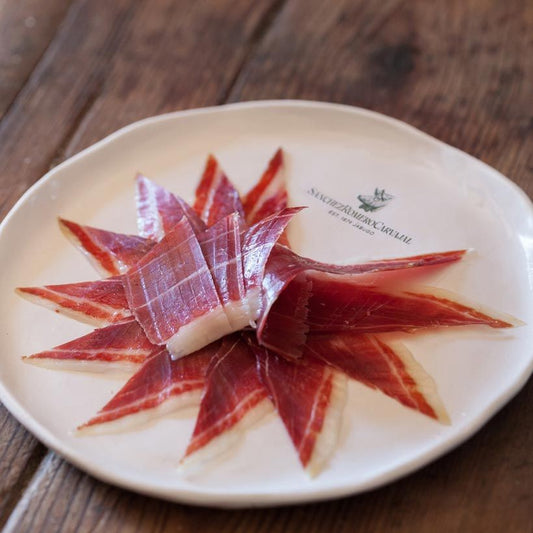


Shoulders
Shoulder Ham: Origin, Process, and Varieties
Shoulder ham (paleta or paletilla) is a Spanish delicacy whose production and quality reflect centuries of culinary and cultural tradition. Although less well-known than jamón (hind leg ham), paletilla holds a prominent place in gastronomy thanks to its unique flavor and distinctive characteristics. Sourced from the front legs of the pig, this cut offers an exquisite gastronomic experience when produced under the proper standards.
Origin of Shoulder Ham
The history of shoulder ham is closely linked to pig farming in the Iberian Peninsula. Ancient Romans already valued cured meat, and this art was perfected over centuries by different cultures. In Spain, the dehesas, with their vast holm oak and cork oak forests, became the ideal setting for raising Iberian pigs, the basis of the highest quality shoulder hams.
The tradition of shoulder ham has developed mainly in regions such as Extremadura, Andalusia, and Castilla y León. In these places, brands like Cinco Jotas, Beher, and Sánchez Romero Carvajal have contributed to elevating this product to international recognition.
The Production Process
The journey to an excellent shoulder ham begins with the selection of the pig and its diet. Once slaughtered, the front legs are prepared through a process that includes salting, washing, settling, drying, and aging.
Different Shoulder Ham Options
There are various types of shoulder ham, differing according to the type of pig, its diet, and the curing method. These options allow consumers to enjoy a range of flavors, textures, and prices.
"Cebo" Shoulder Ham
-Key point: "Cebo" shoulder ham offers a mild and balanced flavor, ideal for those new to cured products.
Iberian Shoulder Ham
Iberian shoulder ham is obtained from Iberian breed pigs, which guarantees higher quality meat. These pieces have fat infiltration that provides a more complex and juicy flavor. Iberian shoulder hams can be classified according to the pig's diet: "cebo," "cebo de campo" (field-fed), or "bellota" (acorn-fed).
Key point: Its high proportion of infiltrated fat gives it an unparalleled texture and flavor, with notes ranging from nuts to sweet nuances.
Serrano Shoulder Ham
Serrano shoulder ham comes from white-breed pigs and is cured in cold and dry climates, mainly in mountainous regions. It is an economical option, with a characteristic flavor, though less complex than Iberian shoulder ham.
Key point: Ideal for tapas and sandwiches, Serrano shoulder ham is a lighter and more versatile alternative.
"Bellota" (Acorn-fed) Shoulder Ham
"Bellota" shoulder ham is the jewel in the crown. It comes from Iberian pigs raised free-range in the dehesas, where they consume acorns as their main energy source during the "montanera" (acorn-feeding season). This type of diet, along with the exercise the animals get, enriches the meat with healthy fatty acids and an unmistakable flavor.
Key point: Considered a gastronomic luxury, its deep and persistent flavor is full of nuances of acorn, herbs, and holm oak.
Featured Brands
In the shoulder ham market, some brands have excelled thanks to their commitment to quality:
Although they share similarities, there are notable differences between shoulder ham and ham (jamón). Shoulder ham is smaller and has a higher bone-to-meat ratio, which affects yield and price. However, its flavor is often more intense due to the concentration of flavors in a more compact piece. Additionally, the texture of shoulder ham is more fibrous, providing a unique experience.
The Importance of the Dehesa
The best shoulder hams, especially "bellota," are deeply linked to the dehesa ecosystem. This environment, characterized by holm oaks and cork oaks, allows pigs to move freely and feed on acorns, which directly impacts the quality of the final product. Protecting and maintaining this habitat not only benefits the consumer but also the environment and local communities.
How to Enjoy Good Shoulder Ham
To fully appreciate shoulder ham, it is essential to slice it correctly. Using an appropriate knife and precise technique allows for thin slices that enhance the aromas and flavors. Additionally, it's important to store it well, keeping it at a controlled temperature and protected from direct light.
A Versatile Delicacy
Shoulder ham is ideal for both special occasions and everyday use. Its uses are varied: it can be the star of a charcuterie board, complement traditional recipes, or be the centerpiece of celebrations. Its versatility makes it an essential part of the Mediterranean diet.
Conclusion
Shoulder ham is much more than a meat product; it is an expression of Spain's culinary tradition and art. From "cebo" shoulder ham to the exquisite "bellota" shoulder ham, each variety offers a unique experience. With outstanding brands like Cinco Jotas, Beher, and Covap, this product remains a symbol of gastronomic excellence that deserves to be enjoyed and valued.
Shoulder ham (paleta or paletilla) is a Spanish delicacy whose production and quality reflect centuries of culinary and cultural tradition. Although less well-known than jamón (hind leg ham), paletilla holds a prominent place in gastronomy thanks to its unique flavor and distinctive characteristics. Sourced from the front legs of the pig, this cut offers an exquisite gastronomic experience when produced under the proper standards.
Origin of Shoulder Ham
The history of shoulder ham is closely linked to pig farming in the Iberian Peninsula. Ancient Romans already valued cured meat, and this art was perfected over centuries by different cultures. In Spain, the dehesas, with their vast holm oak and cork oak forests, became the ideal setting for raising Iberian pigs, the basis of the highest quality shoulder hams.
The tradition of shoulder ham has developed mainly in regions such as Extremadura, Andalusia, and Castilla y León. In these places, brands like Cinco Jotas, Beher, and Sánchez Romero Carvajal have contributed to elevating this product to international recognition.
The Production Process
The journey to an excellent shoulder ham begins with the selection of the pig and its diet. Once slaughtered, the front legs are prepared through a process that includes salting, washing, settling, drying, and aging.
- Salting: The shoulder hams are covered with sea salt to preserve the meat and enhance its flavor. This process varies depending on the size of the piece.
- Washing and Settling: Salt residues are removed, and the meat's conditions are stabilized.
- Drying: The shoulder hams are hung in natural drying sheds, where factors such as temperature and humidity play an essential role.
- Aging: During this stage, the pieces develop their characteristic flavors and aromas thanks to the controlled environment in cellars.
Different Shoulder Ham Options
There are various types of shoulder ham, differing according to the type of pig, its diet, and the curing method. These options allow consumers to enjoy a range of flavors, textures, and prices.
"Cebo" Shoulder Ham
-Key point: "Cebo" shoulder ham offers a mild and balanced flavor, ideal for those new to cured products.
Iberian Shoulder Ham
Iberian shoulder ham is obtained from Iberian breed pigs, which guarantees higher quality meat. These pieces have fat infiltration that provides a more complex and juicy flavor. Iberian shoulder hams can be classified according to the pig's diet: "cebo," "cebo de campo" (field-fed), or "bellota" (acorn-fed).
Key point: Its high proportion of infiltrated fat gives it an unparalleled texture and flavor, with notes ranging from nuts to sweet nuances.
Serrano Shoulder Ham
Serrano shoulder ham comes from white-breed pigs and is cured in cold and dry climates, mainly in mountainous regions. It is an economical option, with a characteristic flavor, though less complex than Iberian shoulder ham.
Key point: Ideal for tapas and sandwiches, Serrano shoulder ham is a lighter and more versatile alternative.
"Bellota" (Acorn-fed) Shoulder Ham
"Bellota" shoulder ham is the jewel in the crown. It comes from Iberian pigs raised free-range in the dehesas, where they consume acorns as their main energy source during the "montanera" (acorn-feeding season). This type of diet, along with the exercise the animals get, enriches the meat with healthy fatty acids and an unmistakable flavor.
Key point: Considered a gastronomic luxury, its deep and persistent flavor is full of nuances of acorn, herbs, and holm oak.
Featured Brands
In the shoulder ham market, some brands have excelled thanks to their commitment to quality:
- Cinco Jotas: A leader in the premium segment, offering 100% Iberian acorn-fed shoulder hams of exceptional quality.
- Beher: A benchmark brand in Guijuelo, renowned for its Iberian shoulder hams with artisanal curing.
- Sánchez Romero Carvajal: History and tradition define this brand, famous for its exclusive products.
- Extrem Puro Extremadura: Specialists in acorn-fed products, combining traditional techniques with innovation.
- Covap: A market leader, this cooperative produces shoulder hams with a sustainable and high-quality approach.
- Altanza: Offers Serrano and Iberian shoulder hams with great care at every stage of the process.
Although they share similarities, there are notable differences between shoulder ham and ham (jamón). Shoulder ham is smaller and has a higher bone-to-meat ratio, which affects yield and price. However, its flavor is often more intense due to the concentration of flavors in a more compact piece. Additionally, the texture of shoulder ham is more fibrous, providing a unique experience.
The Importance of the Dehesa
The best shoulder hams, especially "bellota," are deeply linked to the dehesa ecosystem. This environment, characterized by holm oaks and cork oaks, allows pigs to move freely and feed on acorns, which directly impacts the quality of the final product. Protecting and maintaining this habitat not only benefits the consumer but also the environment and local communities.
How to Enjoy Good Shoulder Ham
To fully appreciate shoulder ham, it is essential to slice it correctly. Using an appropriate knife and precise technique allows for thin slices that enhance the aromas and flavors. Additionally, it's important to store it well, keeping it at a controlled temperature and protected from direct light.
A Versatile Delicacy
Shoulder ham is ideal for both special occasions and everyday use. Its uses are varied: it can be the star of a charcuterie board, complement traditional recipes, or be the centerpiece of celebrations. Its versatility makes it an essential part of the Mediterranean diet.
Conclusion
Shoulder ham is much more than a meat product; it is an expression of Spain's culinary tradition and art. From "cebo" shoulder ham to the exquisite "bellota" shoulder ham, each variety offers a unique experience. With outstanding brands like Cinco Jotas, Beher, and Covap, this product remains a symbol of gastronomic excellence that deserves to be enjoyed and valued.
